Skip to content

Have you ever called your child’s name, only to have them look away instead of looking back at you? Maybe you’ve noticed they rarely make eye contact while you’re talking, avoid looking at relatives, or seem more interested in toys than people’s faces. These moments can leave parents wondering if something is wrong or whether their child is simply developing differently.
If you’re asking yourself, “Why does my child avoid eye contact?” you’re not alone. It’s one of the most common questions parents ask when they begin noticing differences in their child’s social interactions. The reassuring news is that avoiding eye contact doesn’t always mean the same thing. Every child develops differently, and understanding why this happens is the first step toward supporting your child’s unique needs.
At The N.A.E.T. Clinic, we’ve spent more than 40 years helping families better understand their children’s health and development. One thing we’ve consistently learned is that a single behavior rarely tells the whole story. Looking at the whole child – not just one sign – helps parents and healthcare professionals better understand what support may be most beneficial. Parents searching for information about autism eye contact often hope to find simple answers, but understanding a child’s overall development provides a much clearer picture than focusing on eye contact alone.
Should Parents Be Concerned About Limited Eye Contact?
It’s natural to feel concerned when your child doesn’t respond the way you expect. Many parents compare their child with siblings, friends, or other children at daycare and begin to wonder if they’re missing an important milestone.
The first thing to remember is that eye contact exists on a spectrum. Some children naturally make frequent eye contact, while others communicate in different ways. Personality, temperament, age, and even the environment can all influence how comfortable a child feels looking directly at someone.
Instead of asking, “Does my child make enough eye contact?” it can be more helpful to ask:
- Do they smile when they see familiar people?
- Do they enjoy playing with family members?
- Do they point to show you interesting things?
- Do they respond when their name is called?
- Do they communicate through gestures or facial expressions?
Looking at these behaviors together provides a much clearer understanding of your child’s development than focusing on eye contact alone.
What Does Eye Contact Tell Us About Development?
Eye contact is one of the earliest ways children connect with the people around them. Before children begin using words, they often communicate by looking at faces, smiling, pointing, and sharing experiences with the people they trust.
These small moments help children build relationships and learn from the world around them. Eye contact also supports language development because children often watch facial expressions and mouth movements while others speak.
However, eye contact is only one piece of a much larger picture. Some children communicate beautifully through actions, gestures, or play, even if they don’t consistently look directly into someone’s eyes.
At The N.A.E.T. Clinic, we’ve observed that parents often notice changes in communication long before anyone else does. Those observations are valuable because they help healthcare professionals better understand each child’s unique developmental journey.

Common Reasons Children May Avoid Eye Contact
There are many reasons why a child avoids eye contact, and not all of them are related to a developmental condition.
Some children are naturally shy and need time to feel comfortable around new people. Others become so focused on an activity that they don’t notice someone speaking to them. Bright lights, loud sounds, or busy environments can also make social interaction more challenging for some children.
Other possible reasons include:
- Feeling overwhelmed in unfamiliar situations.
- Difficulty processing several types of information at once.
- Sensory sensitivities that make direct eye contact uncomfortable.
- Temporary stress or anxiety.
- Individual differences in personality and communication style.
Because there are many possible explanations, it’s important to avoid jumping to conclusions based on one behavior alone.
Can Avoiding Eye Contact Be Related to Autism?
Many parents immediately think about autism when they notice differences in eye contact. While eye contact can sometimes be one of the characteristics healthcare professionals consider during an evaluation, it is never used by itself to make a diagnosis.
When families search online for information about autism eye contact, they often discover that eye contact is discussed alongside many other developmental characteristics. Healthcare professionals look at how a child communicates, plays, responds to others, learns new skills, and interacts in everyday situations before forming a complete picture.
For some children, lack of eye contact autism discussions may raise important questions, but it’s essential to remember that many children with limited eye contact do not have autism. Likewise, children diagnosed with autism can have very different communication styles. Some make consistent eye contact, while others communicate in different but equally meaningful ways.
This is why understanding your child’s overall development is far more valuable than focusing on one behavior in isolation.

How Healthcare Professionals Look at Eye Contact
Many parents are surprised to learn that healthcare professionals don’t evaluate eye contact by simply counting how often a child looks at someone.
Instead, they observe eye contact as part of everyday communication. They may notice whether a child looks at a parent while asking for help, shares excitement during play, responds to familiar faces, or makes eye contact during activities they enjoy.
Eye contact is only one piece of a much larger developmental picture. Professionals also consider how a child communicates through gestures, facial expressions, play, language, and social interaction. Looking at all of these areas together provides a much more complete understanding of a child’s individual development.
What Our Experience Has Taught Us
Over the past 40 years, one of the most valuable lessons we’ve learned is that children communicate in many different ways.
Some children naturally use fewer words but enjoy sharing experiences through play. Others may avoid eye contact in unfamiliar situations yet become highly engaged with people they know and trust. We’ve also seen that parents often notice these subtle differences long before anyone else.
Rather than focusing on one behavior, we encourage families to look at patterns over time. Understanding how your child interacts across different environments and with different people often provides more meaningful information than any single moment.
Many families have also shared that understanding the reasons behind their child’s behaviors helped them feel more confident and hopeful as they moved forward. This thoughtful approach helps families move from uncertainty to understanding while ensuring that every child is seen as an individual rather than a checklist of behaviors.
Building Connection Without Pressure
Parents often ask if they should encourage their child to make more eye contact.
The answer is to focus on building connection instead of forcing a specific behavior.
Children learn best when interactions feel natural, enjoyable, and safe. Simple everyday moments can create meaningful opportunities for communication.
You can encourage connection by:
- Joining your child in activities they already enjoy.
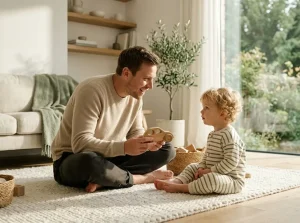
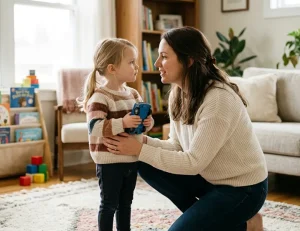
- Sitting face-to-face during play without expecting constant eye contact.
- Reading books together and talking about the pictures.
- Celebrating smiles, gestures, and other forms of communication.
- Giving your child time to respond instead of rushing conversations.
These small interactions help strengthen relationships and encourage social communication in a way that feels comfortable for your child.

Understanding the Bigger Picture
Parents searching online often come across long lists of autism symptoms, which can quickly become overwhelming.
While learning about developmental milestones can be helpful, it’s equally important to remember that no single behavior tells the whole story. Every child has their own strengths, personality, learning style, and pace of development.
That’s why experienced healthcare professionals take time to understand the complete picture before making recommendations. Looking at communication, social interaction, play, sensory responses, and overall development together provides a far more accurate understanding than focusing on eye contact alone.
Every Child's Journey Is Different
One message we hope every parent takes away is this: your child’s future cannot be predicted by one behavior.
Throughout our years of working with families, we’ve seen children grow, develop new skills, and gain confidence in many different ways. Progress doesn’t always happen overnight, and it rarely follows the same path for every child.
What matters most is recognising concerns early, asking questions, and seeking reliable guidance when needed. Taking those first steps allows families to better understand their child’s unique needs while creating opportunities to support continued growth.
If you’ve been searching for answers about autism eye contact, remember that one behavior never defines your child. Looking at their overall communication, social interactions, and development provides a more complete understanding and helps guide the most appropriate next steps.
Continue Learning From Our Educational Resources
Learning doesn’t stop after reading one article.
We encourage parents to continue exploring educational resources that answer the questions they’re already asking. Reading published research, watching physician discussions, and hearing from families through patient success stories can provide valuable insight and reassurance throughout your journey.
The more you understand about your child’s development, the more confident you’ll feel when making decisions that support their well-being. Every question you ask is another step toward helping your child thrive.
FAQs
Children may look away for many reasons, including shyness, sensory sensitivities, distraction, or simply because they’re concentrating on what they’re hearing. Looking away doesn’t always mean they aren’t listening.
Yes. Food sensitivities may contribute to low energy levels by causing digestive discomfort, inflammation, or poor nutrient absorption. If fatigue continues without a clear reason, it’s worth discussing your symptoms with a healthcare provider.
Yes. As children develop communication skills, become more comfortable in social situations, and receive appropriate support when needed, many naturally increase their use of eye contact during everyday interactions.
Rather than insisting on constant eye contact, focus on creating enjoyable interactions through play, conversation, and shared activities. Building trust and connection is often more beneficial than repeatedly asking for eye contact.
No. Eye contact is only one aspect of development. Healthcare professionals consider many factors before making a diagnosis, including communication, play, social interaction, and developmental history.
Start by observing your child’s communication in different situations and writing down any concerns you notice. Sharing these observations with a qualified healthcare professional can help guide the next steps and provide reassurance or recommendations if further evaluation is appropriate.
Related Articles

Take the Next Step
If you’re searching for autism treatment near me, the next step is understanding what’s happening beneath the surface.